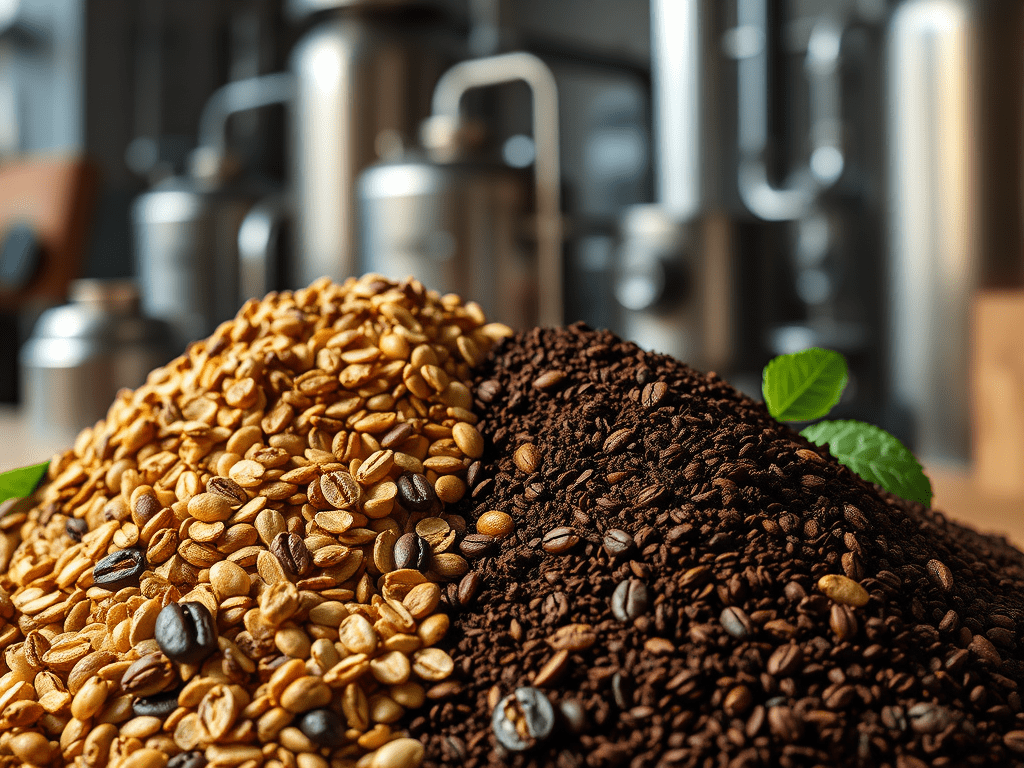
Every year, millions of tons of food byproducts are thrown away, but they don’t have to be. Two such byproducts—Brewer’s Spent Grain (BSG) and Spent Coffee Grounds (SCG)—offer untapped potential. A new study published in Applied Sciences explores how the microbes in these materials behave and what that means for turning them into useful products.
Meet the Researchers
This research was conducted by a team of scientists, including Christian Hermansen, Qi Kang Chong, Sherilyn Ho, Federica Natali, Melanie Weingarten, and Eric Charles Peterson. Their work was carried out at institutions in Singapore, the Singapore Institute of Food and Biotechnology Innovation (SIFBI), Agency for Science, Technology, and Research (A*STAR). You can find the full study here.
What Are Brewer’s Spent Grain and Coffee Grounds?
- Brewer’s Spent Grain (BSG): A leftover from making beer. It’s packed with fibers and proteins.
- Spent Coffee Grounds (SCG): The used-up coffee bits after brewing. They’re rich in oils and antioxidants.
Together, they make up a huge chunk of waste:
- 36.4 million tons of BSG worldwide every year.
- 15.3 million tons of SCG globally.
These materials are too valuable to waste. Cities like Singapore produce hundreds of thousands of tons of food waste annually, and only a small fraction gets recycled. What if we could change that?
What Happens to BSG and SCG After They’re Made?
When these byproducts are stored, microbes start to grow on them. The type of storage—whether with or without oxygen—determines what kinds of microbes show up.
Key Findings from the Study
- Bacteria and Fungi Grow Quickly:
- In oxygen-free environments, certain bacteria (like Bacillus coagulans) multiply.
- With oxygen, harmful molds such as Aspergillus flavus can appear. Some molds might even produce dangerous toxins.
- Storage Matters:
- Without oxygen: Bacteria dominate but are less harmful.
- With oxygen: Fungi take over and can spoil the material faster.
- Different Sources, Different Microbes:
- BSG from breweries had fewer bacteria than BSG from recycling facilities.
- SCG from cafes had minimal microbes compared to SCG stored at recycling centers.
Why Does This Matter?
When microbes spoil BSG and SCG, it’s harder to use them safely. To unlock their potential, we need to store and process them quickly or find ways to preserve them.
What Can We Do with These Byproducts?
Despite the challenges, BSG and SCG can be transformed into useful products:
- Food Products:
Their nutrients make them great for adding to snacks, baked goods, or health supplements. - Animal Feed:
With proper treatment, they could become an affordable and nutritious option for feeding livestock. - Eco-Friendly Materials:
- Biofuels: Turned into energy sources like ethanol or biogas.
- Bioplastics: Used to create biodegradable packaging materials.
- Cosmetics:
Extract antioxidants and oils for skin and hair care products.
Turning Waste Into Treasure
This research shows that BSG and SCG don’t have to end up in landfills. By understanding how microbes behave, we can find ways to store these byproducts safely and give them a second life. Imagine a world where your morning coffee or evening beer contributes to a cleaner, more sustainable planet.
Want to learn more? Check out the full study here.
Share Your Thoughts
What do you think about using byproducts like BSG and SCG to create new, sustainable solutions? Have you seen or tried products made from these materials, like upcycled snacks or eco-friendly packaging?
We’d love to hear your thoughts, ideas, and experiences! Leave a comment below to join the conversation and share your insights on this exciting topic. Together, we can rethink waste and explore a future where nothing goes to waste.
 Tech and Tofu
Leave a comment