
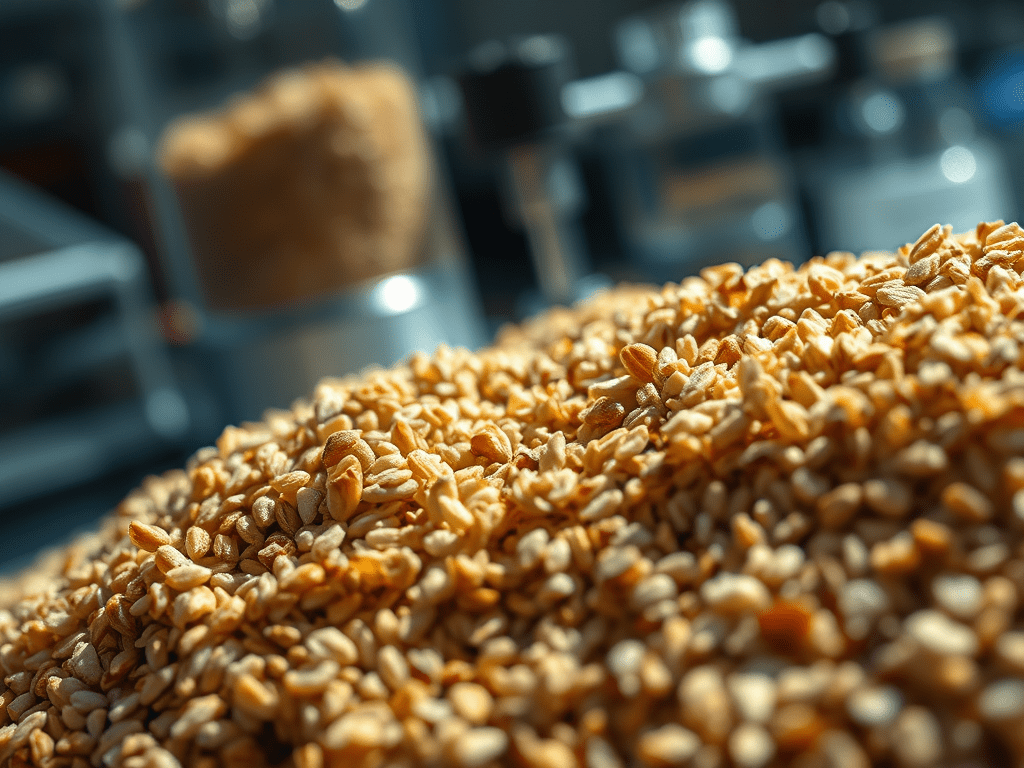
Brewer’s spent grain (BSG), the primary by-product of the brewing industry, represents a significant source of biomass with potential for valorization. Traditional disposal methods of BSG pose environmental challenges and overlook its potential as a valuable resource. Recent studies have explored the application of fungal solid-state fermentation (SSF) as a means to enhance the nutritional profile of BSG, transforming it into a more valuable product for various industries. This article delves into the methodologies, outcomes, and implications of utilizing SSF to improve the nutritional value of BSG, highlighting key findings from recent research.
Introduction
The brewing industry generates substantial quantities of BSG, accounting for approximately 85% of its by-products. Typically, BSG is rich in fiber, proteins, and phenolic compounds, yet its direct application is limited due to its high moisture content and rapid spoilage. Traditional disposal methods, such as landfilling or use as animal feed, do not fully exploit the potential of BSG and may contribute to environmental concerns. Therefore, innovative approaches to valorize BSG are essential.
Fungal SSF has emerged as a promising technique to enhance the nutritional value of agro-industrial residues. This process involves the cultivation of microorganisms, particularly fungi, on moist solid substrates in the absence of free-flowing water. The fungi metabolize the substrate, leading to the production of valuable metabolites and the modification of the substrate’s composition. In the context of BSG, SSF can improve its protein content, digestibility, and bioactive compound profile, making it more suitable for applications in food, feed, and other industries.
Methodology
In a study titled “Valorization of brewer’s spent grain using fungi solid-state fermentation to enhance nutritional value,” researchers employed SSF to treat BSG using specific fungal strains. The process parameters, including moisture content, temperature, pH, and incubation time, were optimized to maximize the nutritional enhancement of BSG.
The BSG was first pre-treated to adjust its moisture content and pH to levels conducive for fungal growth. Selected fungal strains known for their ability to produce enzymes and bioactive compounds were inoculated onto the BSG substrate. The fermentation was carried out under controlled conditions, with regular monitoring of parameters such as temperature and humidity. After the fermentation period, the fermented BSG was analyzed for changes in its nutritional composition, including protein content, fiber content, and the presence of bioactive compounds.
Results and Discussion
The SSF process led to significant improvements in the nutritional profile of BSG. Notably, there was an increase in crude protein content, attributed to the fungal biomass and the synthesis of microbial proteins during fermentation. The degradation of complex carbohydrates and fibers by fungal enzymes resulted in increased digestibility of the substrate. Additionally, the fermentation process enhanced the levels of bioactive compounds, such as phenolics and antioxidants, which have potential health benefits.
The study also highlighted the importance of selecting appropriate fungal strains and optimizing fermentation conditions to achieve the desired nutritional enhancements. Different fungi possess varying enzymatic capabilities, influencing the extent of substrate modification and the spectrum of metabolites produced. Therefore, a tailored approach is necessary to maximize the benefits of SSF for BSG valorization.
Applications and Implications
The enhanced BSG resulting from SSF holds promise for various applications. In the food industry, it can be utilized as a functional ingredient, enriching products with proteins and bioactive compounds. Its improved digestibility makes it suitable for incorporation into animal feed, potentially reducing the need for conventional feed ingredients and contributing to more sustainable livestock production. Moreover, the bioactive compounds present in the fermented BSG may have applications in nutraceuticals and pharmaceuticals.
The valorization of BSG through SSF aligns with the principles of circular economy and sustainable development. By transforming a low-value by-product into a nutritionally enriched material, this approach reduces waste generation and adds value to the brewing industry’s supply chain. It also offers an alternative to traditional disposal methods, mitigating environmental impacts and contributing to resource efficiency.
Conclusion
Fungal SSF represents a viable and effective strategy for enhancing the nutritional value of BSG. The process not only increases the protein content and digestibility of BSG but also enriches it with bioactive compounds, broadening its potential applications. Further research is warranted to optimize the process parameters, explore the use of different fungal strains, and assess the scalability of this approach for industrial applications.
Related Studies
For further reading on the valorization of BSG through SSF and related methodologies, consider the following studies:
- “Enhancement of Nutritional Value of Brewer’s Spent Grain by Solid-State Fermentation with Aspergillus oryzae“**
- “Bioconversion of Brewer’s Spent Grain by Lactic Acid Bacteria and Fungi: Impact on Nutritional Profile and Antioxidant Activity”
- “Solid-State Fermentation of Brewer’s Spent Grain for Protein Enrichment and Its Effects on Nutritional Composition”
- “Utilization of Brewer’s Spent Grain to Improve Nutritional and Functional Properties of Bread”
- “Fermentation of Brewer’s Spent Grain: Optimization of Process Parameters and Impact on Nutritional Enhancement”
Engage with Us
We invite you to share your thoughts and insights on the valorization of brewer’s spent grain through fungal solid-state fermentation. Please leave a comment below and follow our page for more articles on sustainable practices and innovative research in the food and beverage industry.
 Tech and Tofu
Leave a comment