Introduction
Mycelium, the intricate web-like structure of fungi, has long remained hidden beneath the soil, quietly shaping ecosystems and playing a critical role in the decomposition of organic material. However, in recent years, this remarkable organism has captured the attention of scientists, entrepreneurs, and sustainability advocates. As the world faces pressing environmental challenges, including climate change and plastic pollution, mycelium has emerged as a promising natural resource with the potential to revolutionize multiple industries.
From biodegradable packaging and sustainable textiles to plant-based meats and architectural materials, mycelium is being utilized in groundbreaking ways. This article explores the science behind mycelium, its various applications, and the pioneering companies leading the way in harnessing its full potential.
Understanding Mycelium: Nature’s Underground Network
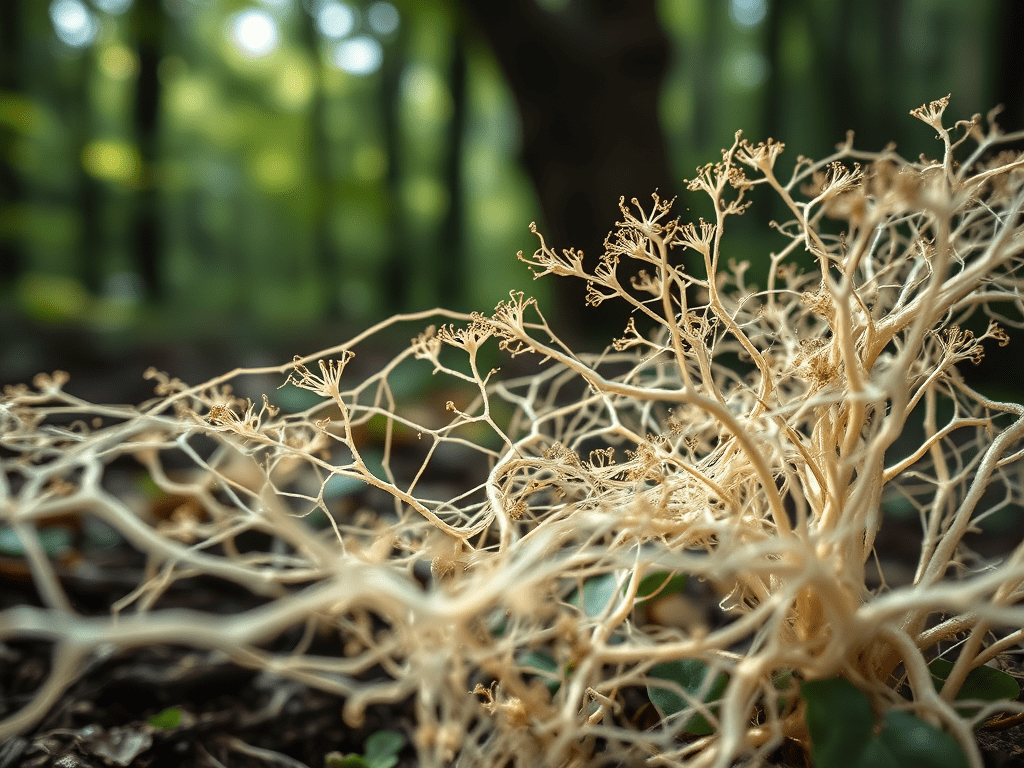
Mycelium is the vegetative part of fungi, consisting of thread-like structures known as hyphae. These microscopic filaments form vast underground networks, often stretching for miles beneath forests and fields. Functioning as nature’s recycler, mycelium decomposes organic matter, breaking down dead plants and animals while returning essential nutrients to the ecosystem.
Beyond its ecological role, mycelium possesses several unique properties that make it an attractive material for industrial applications:
- Biodegradability: Unlike plastic and synthetic materials, mycelium decomposes naturally without leaving harmful residues.
- Durability and Strength: Mycelium-based materials can be as strong as traditional construction materials like concrete or plastic.
- Lightweight and Flexible: Despite its strength, mycelium remains lightweight and adaptable to various forms.
- Rapid Growth: Mycelium can grow within days or weeks, making it an efficient and sustainable resource.
These attributes have paved the way for mycelium-based innovations across multiple sectors.
The Industrial Revolution of Mycelium: Applications and Market Trends
1. Sustainable Packaging
One of the most immediate and impactful uses of mycelium is in the packaging industry. With plastic pollution reaching alarming levels, companies are turning to biodegradable mycelium-based packaging as an eco-friendly alternative.
Ecovative Design
- Product: Mushroom Packaging
- Overview: Ecovative Design, based in New York, has been a pioneer in developing mycelium-based packaging. Their product, Mushroom Packaging, is an eco-friendly alternative to Styrofoam and plastic packaging.
- Key Benefits: 100% biodegradable, compostable, and can decompose within a few weeks.
- Use Cases: Dell and Ikea have adopted mycelium packaging to reduce plastic waste.
- Website: ecovative.com
2. Mycelium-Based Leather and Textiles
The fashion industry is a major contributor to environmental degradation, with leather production leading to deforestation and pollution. Mycelium-based leather is an innovative and sustainable alternative.
MycoWorks
- Product: Reishi™ (Mycelium-Based Leather)
- Overview: MycoWorks, a California-based company, has developed Reishi™, a mycelium-based leather that mimics the texture and durability of animal leather.
- Key Benefits: Fully biodegradable, animal-free, and customizable.
- Use Cases: High-end fashion brands have incorporated Reishi™ into bags, shoes, and accessories.
- Website: mycoworks.com
Bolt Threads
- Product: Mylo™ Leather
- Overview: Bolt Threads has partnered with luxury brands like Stella McCartney to create Mylo™, a leather alternative derived from mycelium.
- Key Benefits: Sustainable, durable, and visually indistinguishable from traditional leather.
- Website: boltthreads.com
3. Mycelium in the Food Industry
Mycelium-based foods are gaining traction as sustainable, high-protein alternatives to meat and dairy.
Atlast Food Co.
- Product: MyBacon™ (Mycelium-Based Bacon)
- Overview: Atlast Food Co., a spin-off from Ecovative, is developing mycelium-based meat alternatives that mimic the texture of whole cuts.
- Key Benefits: Nutrient-rich, plant-based, and environmentally friendly.
- Use Cases: Available in select markets as a bacon alternative.
- Website: atlastfood.co
Beyond Meat
- Product: Mycelium-Based Steak
- Overview: Beyond Meat, known for its plant-based burgers, has expanded into mycelium-based steaks.
- Key Benefits: Replicates the texture and juiciness of traditional steak.
- Website: beyondmeat.com
4. Mycelium in Construction and Architecture
Mycelium is being used to develop eco-friendly building materials that are strong, lightweight, and sustainable.
Mogu
- Product: Mycelium-Based Panels and Flooring
- Overview: Mogu, an Italian company, produces building materials made from mycelium.
- Key Benefits: Fire-resistant, sound-absorbing, and fully biodegradable.
- Use Cases: Used in home interiors, furniture, and acoustic panels.
- Website: mogu.bio
BIOHM
- Product: Mycelium Insulation
- Overview: BIOHM is developing biodegradable insulation materials from mycelium.
- Key Benefits: Mold-resistant, thermally efficient, and carbon-negative.
- Website: biohm.co.uk
5. Mycelium in Medicine and Biotechnology
Mycelium has immense potential in healthcare, from antibiotic development to biofabricated tissues.
MycoTechnology
- Product: Mycelium-Based Nutritional Ingredients
- Overview: MycoTechnology uses mycelium fermentation to enhance food flavors and nutritional value.
- Key Benefits: Improves protein content and removes bitterness in plant-based foods.
- Website: mycotechcorp.com
MyceliaCore
- Product: Biofabrication Technologies
- Overview: MyceliaCore is exploring ways to use mycelium in regenerative medicine, including tissue scaffolding.
- Website: myceliacore.com
Challenges and Future Prospects
While mycelium-based products offer numerous advantages, there are challenges that need to be addressed for widespread adoption:
Challenges
- Scaling Production – Large-scale manufacturing of mycelium-based products remains a challenge due to infrastructure limitations.
- Cost Considerations – Some mycelium materials are still expensive compared to traditional materials.
- Consumer Awareness – Many people are unaware of mycelium’s benefits and applications.
Future Prospects
- Advancements in Biotechnology – With continued research, scientists can enhance mycelium’s properties, making it more adaptable.
- Expansion into New Markets – Mycelium has potential applications in aerospace, electronics, and medical implants.
- Government Policies and Support – Increased investment in sustainable materials could accelerate mycelium’s adoption worldwide.
Conclusion
Mycelium is more than just a biological curiosity—it is a game-changing material that has the potential to transform industries and promote sustainability. Companies worldwide are harnessing its power to create biodegradable packaging, sustainable fashion, plant-based meats, eco-friendly building materials, and even medical innovations.
As research and technology advance, mycelium-based products will likely become more affordable and widely available, offering an alternative to harmful synthetic materials. In a world striving for sustainability, mycelium stands as a beacon of hope, demonstrating that solutions to our environmental challenges may lie beneath our very feet.
References:
 Tech and Tofu
Leave a comment