Cell-cultivated meat—grown from animal cells in a lab—is edging closer to replicating the look, taste, texture, and appeal of conventional meat. One of its remaining challenges: achieving the intricate marbling—the interlaced pattern of fat and muscle that defines the juiciness, flavor, and culinary prestige of premium beef. South Korean scientists might have found the solution.
Why Marbling Matters
Marbling isn’t just cosmetic. Intramuscular fat penetrates the lean meat, transmitting flavors and lubricating muscle fibers during cooking. This improves tenderness, taste, and mouthfeel. Without it, cell-cultured meat usually appears as a uniform, rubbery block—nutritional, yes, but not satisfying at the sensory level expected from a steak or rib-eye.
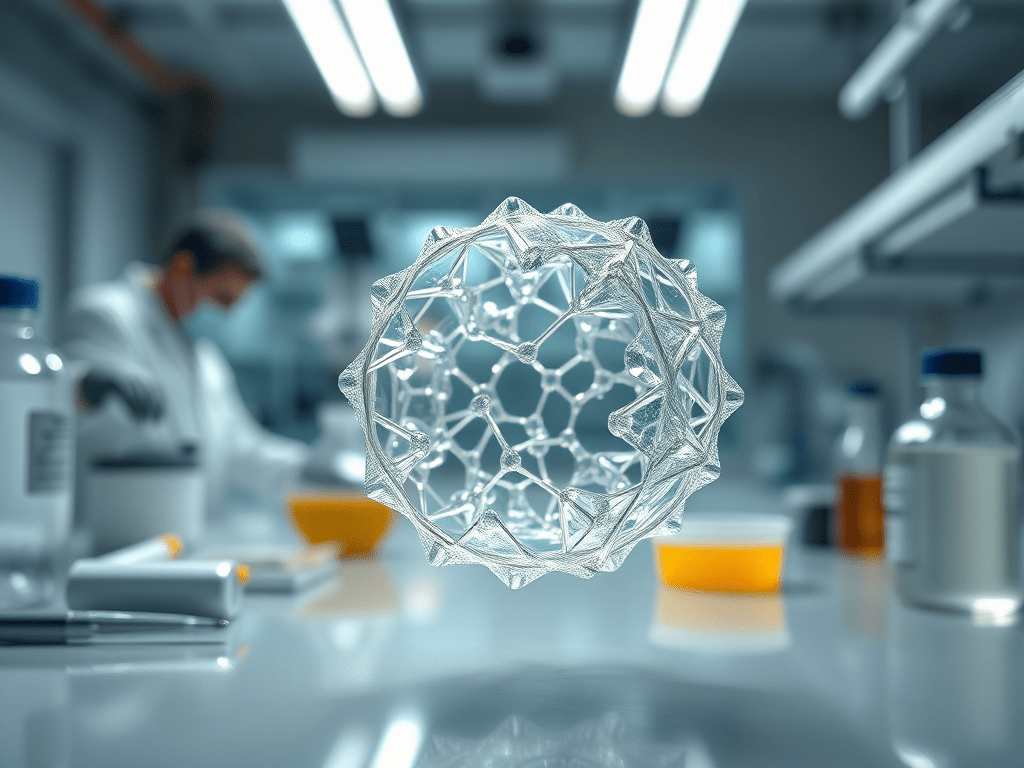
To transcend this limitation, researchers at Sogang University, Inha University, and the Korea Research Institute of Chemical Technology developed a self-healing polymer scaffold that orchestrates fat and muscle cells into marbled architecture.
The Concept: Self‑Healing Scaffolds That Act Like Meat‑Glue—Only Better
Traditional approaches either:
- Coculture muscle and fat cells together—difficult due to differing nutritional needs, or
- Post-assemble them using external adhesives (e.g., meat glue) or mechanical pressing.
These methods risk poor integration, uneven distribution, or reliance on artificial additives. The Korean solution uses a scaffold engineered to self-assemble and self-heal via molecular bonds:
- A hydrogel composed of boronic acid–conjugated chitosan and poly (vinyl alcohol).
- At neutral pH, boronic acid forms reversible bonds with diols (in chitosan), underpinned by hydrogen bonding.
- This yields a scaffold that is strong yet flexible, able to heal itself after deformation—perfect for joining separate muscle and fat modules during culture
Think BIO-Lego blocks: components attach without glue and hold together under wet, warm conditions—exactly what cell culture requires.
How It Works: Modular Cultivation with Molecular Precision
Here’s a step-by-step look at the process, as outlined by the research:
1. Designing the Hydrogel Scaffold
- Composition: boronic acid + chitosan + PVA.
- Properties: compressive strength up to 2.41 MPa; stiffness (Young’s modulus) from ~60 to 440 kPa—adjustable to match muscle or fat tissue
2. Cell Seeding
- Soft hydrogel variants support preadipocytes (fat progenitor cells like 3T3‑L1).
- Stiffer variants favor myoblast proliferation and differentiation (e.g., muscle precursor cells like C2C12 or bovine primary cells)
3. Separate Cultivation
- Cells are grown in their tailored scaffolds under optimal conditions, differentiating into mature fat and muscle tissues.
4. Assembly via Self‑Healing
- Modular scaffold-cell units are brought together, and molecular bonds form spontaneously—no external adhesive needed.
- The scaffold “heals” at the interface, forging cohesive, stable tissue blocks.
5. Validation
- The result: centimeter-scale marbled tissues. Fat and muscle units interlock in patterns akin to conventional steak.
- Cell alignment and tissue stability were confirmed—essential for texture replication
Cooking & Nutritional Profile
The team went further, testing culinary viability:
- Pan-frying at 150 °C for four minutes.
- The cultured meat held structural integrity, browned like bacon, and retained “bite” and juiciness
- The assembled tissue was ~64.5% muscle, ~35.5% fat by weight:
- ~10% protein, ~19% fat (≈70% unsaturated fatty acids).
- Boron (from boronic acid) content was below 0.07%—within food safety limits. Washing in glucose reduced this further
Outcome: an edible, nutritionally valid piece of meat that looks, feels, cooks, and tastes like the real thing.
Scientific Significance: A Leap Forward
Structural Breakthrough
First successful use of self-healing scaffolds under physiological conditions to create marbled cultured meat
Edible & Scalable Design
Materials are food-compatible. The scaffold is inexpensive and integrates into existing cell-based meat production lines
Mechanical Versatility
Variable stiffness supports both fat and muscle growth—crucial for mimicking real tissue microenvironments
Self‑Assembly Without Glue
Overcomes issues of uneven adhesion or reliance on mechanical tools, using molecular bonds for seamless integration
Broader Context: Cultured Meat Scaffolds 101
To fully appreciate the innovation, it’s helpful to know the larger landscape of cultured meat scaffold technology:
- Scaffolds mimic the extracellular matrix (ECM) to promote cell attachment, growth, differentiation, and alignment Approaches include hydrogels, fibrous nanomaterials (e.g., electrospun polymers), 3D-printed constructs, plant-derived decellularized matrices, or microcarriers
- Challenge: achieving structured, steak-like products (not just patties or sausages), requiring fat-muscle architecture and vascular-like networks for nutrient diffusion
The Korean team’s self-healing scaffold stands out: it’s versatile, scalable, and capable of orchestrating patterned tissue assembly.
Future Possibilities & Applications
Scaling Up Marbled Cuts
- From centimeters to full-size steaks (≈10–20 cm), replicating rib-eyes, New York strips, etc.
- Requires enhanced nutrient delivery systems—perfusion, microvasculature, or thicker scaffold networks
Customized Nutrition & Flavour
- Adjust composition: alter fat ratio, fatty acid profiles, protein content
- Infuse scaffolds with nutrients, flavours, or plant components for hybrid products
Industrial Automation
- Robotic systems could snap together cell-scaffold modules before perfusion culture—a modular, assembly-line approach
Cross-Species Adaptation
- The scaffold concept could be applied to pork, chicken, fish, and even novel protein sources like insect or lab-grown exotic meats
Smart Scaffold Engineering
- Tools like AI & machine learning may optimize scaffold design—predicting mechanics, cell behaviour, and assembly outcomes
Structured Hybrid Foods
- Combining plant and animal proteins: e.g., meat interlaced with legumes or grains for nutrition and sustainability
Scaffold Recovery or Biodegradability
- Design scaffolds that degrade post-cultivation, leaving purely cellular meat—a “zero scaffold” product
- Or recover/recycle scaffold materials for reuse
Market & Regulation Ahead
Cost Reduction
- Marbled cultured meat could enter premium markets if production scales and costs drop
- The scaffold’s use of inexpensive polymers makes this viable
Safety, Approval & Perception
- Regulators (FDA, EFSA, MFDS) will evaluate scaffold safety—ensuring no harmful residues (e.g., boron)
- Consumer education will be key in building trust for lab-grown “real” meat
Sustainability Impact
- Cultured meat can reduce greenhouse gas emissions, land use, antibiotic dependency, and animal slaughter—but only if it achieves parity in sensory quality and economic scale
Conclusion
The Korean team’s self-healing scaffold is a major leap towards fully structured, marbled cultured meat. It unlocks the sensory quality that consumers expect from high-end meat, while maintaining the safety, sustainability, and ethical advantages of cellular agriculture.
Key breakthroughs:
- Dual-polymer hydrogel scaffold that self-heals through reversible bonds
- Adjustable rigidity for muscle/fat growth
- Seamless assembly of separate tissues into cohesive marbled blocks
- Edibility and scalability, aligning with commercial production needs
This innovation accelerates a shift from novelty testbeds to real-world, steak-like products—not just burgers—and brings the promise of lab-grown meat with authentic flavour and mouthfeel within measurable reach.
Source Links
- Korean scientists self-healing scaffold news (Protein Production Technology) biz.chosun.com+1proteinproductiontechnology.com+1proteinproductiontechnology.comproteinproductiontechnology.com+1proteinproductiontechnology.com+1
- Inha University hydrogel study details (Protein Production Technology)
- Hydrogels supporting marbling patterns (ACS journal summary) proteinproductiontechnology.com+3pubs.acs.org+3proteinproductiontechnology.com+3
- Background on scaffolding in cultured meat (GFI, Wikipedia, Deep Dive) gfi.org
- Future potential with AI (arXiv survey) arxiv.org+1
 Tech and Tofu
Leave a comment