What if you could enjoy rich, creamy butter—without raising cows or harvesting plants? Savor, a Silicon‑Valley–born food tech company, is making that a reality. Launched in 2022 and backed by investors like Breakthrough Energy Ventures (Bill Gates) and Synthesis Capital, Savor is pioneering a thermochemical platform that builds real fats—identical to traditional dairy and plant fats—from the simplest building blocks: carbon, hydrogen, and oxygen.
Their first commercial product? A cow‑free butter alternative synthesized directly from captured carbon dioxide, green hydrogen, and methane—no cows, no soybean fields, no palm trees.
Why This Innovation Matters
1. Sustainability & Climate Impact
Traditional butter production—from grazing cows, crop irrigation, and livestock supply chains—is resource-intensive. Livestock alone contributes 14.5% of global greenhouse gas emissions. Savor’s thermochemical approach achieves over 70% fewer CO₂ emissions per calorie than conventional butter, with virtually no farmland or water footprint.
2. Resilience & Supply Chain Security
Traditional fats—like cocoa butter, palm oil, tallow—are vulnerable to crop failure, geopolitics, and deforestation pressure. Savor’s carbon‑based platform offers a secure, domestic alternative using feedstocks that can be sourced from anywhere.
3. Health & Custom Nutrition
The butter they create is chemically identical to milk fat. In fact, they can fine‑tune the fatty acid profile to be richer in medium‑chain and odd‑chain variants—studied for metabolic health benefits.
4. Culinary Authenticity
Celebrity chefs—including those at Michelin‑starred restaurants—report that Savor’s butter behaves and tastes like the real thing: flaky croissants, chocolate bonbons, brioche, and more.
How the Cow‑Free Butter Is Made: A Thermochemical Breakthrough
a) Feedstock Capture
They start with point‑captured atmospheric or industrial carbon dioxide, food‑grade methane, and green hydrogen—sourced via electrolysis using renewable power.
b) Thermochemical Synthesis
In a high‑pressure, high‑temperature reactor (repurposed from oil refining), these gases react to form alkane chains—basic hydrocarbons.
c) Fatty Acid Building Blocks
These alkane chains are chemically modified into a diverse library of fatty acids, including short-, medium-, and long-chain varieties—plus odd‑chain ones.
d) Tailored Triglyceride Formulation
Savor blends and assembles fatty acids into triglycerides, crafting fats that mimic butter, cocoa butter, tallow, vegetable oils—and more.
e) Final Butter Product
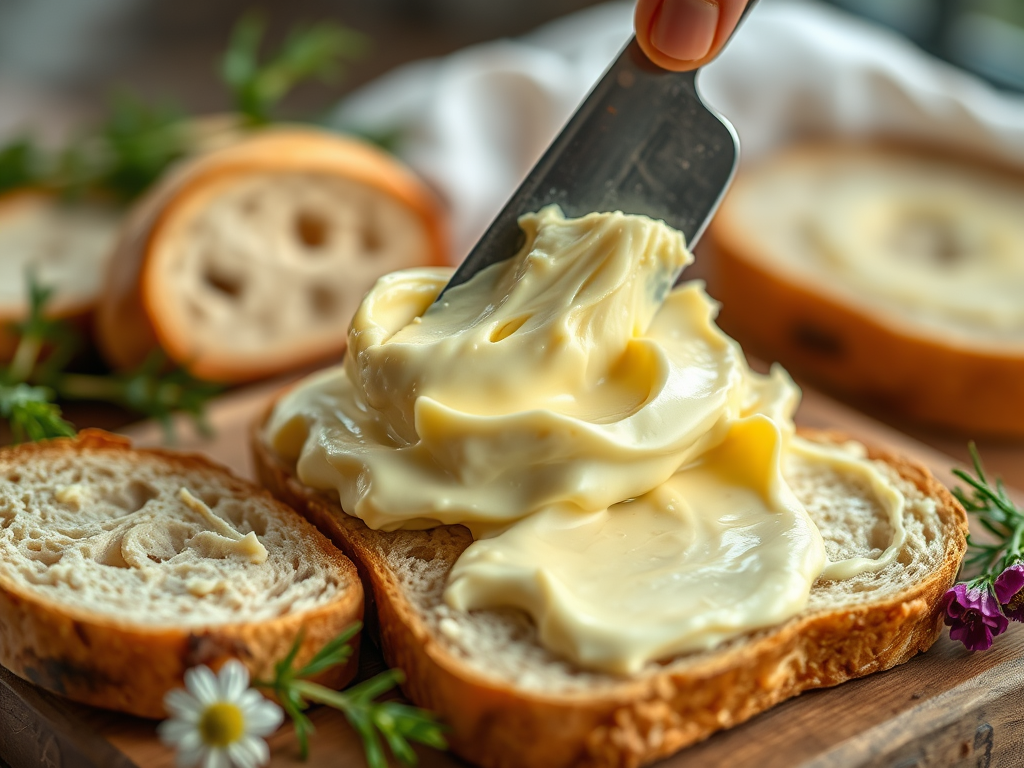
The resulting product is blended into a spreadable form using ingredients like water, sea salt (<2 %), lecithin, natural flavours, and beta‑carotene (for colour)—with the fat at its core.
From Pilot to Market
- Pilot facility: A 25,000‑sq‑ft plant in Batavia, Illinois, now produces metric tons of carbon‑based fats.
- Regulatory approval: They’ve self‑certified GRAS (Generally Recognized as Safe) in the U.S., are awaiting a “no‑questions” FDA letter, and are preparing filings for
- Culinary trials: High-end chefs at Single Thread, ONE65, Jane the Bakery, and others have put it to the test in flaky pastries and desserts.
- Distribution strategy: Rolling out first in restaurants and bakeries; forging R&D collaborations with large CPG companies for broader ingredient applications.
Future Potential: Beyond Butter
1. Cocoa Butter Equivalent (CBE)
Their thermochemical toolkit can recreate medium‑melting-point fats ideal for chocolate, cosmetics, and pharmaceuticals.
2. Tallow, Lard, Specialty Oils
They’ve already prototyped fats that mimic animal fats and tropical oils—tallow, lard, palm oil, coconut oil—never touching livestock or plantations
3. Personalized Fat Blends
Able to tailor fatty acid ratios—medium vs. long chain; odd‑chain vs. even‑chain—they can engineer fats optimized for taste, texture, nutrition, or industrial function.
4. Global Food Resilience
They are positioning themselves as an alternative solution for fat supply—even in regions impacted by conflict, trade limitations, or drought affecting traditional crops.
5. Climate Benefits
On scale, Savor’s carbon‑based approach could help slash deforestation (especially linked to palm oil), drastically reduce water use and dramatically lower food system emissions.
Challenges & Considerations
- Scaling & Cost: Capital investment, energy efficiency, and carbon sourcing logistics remain hurdles.
- Regulation & Labeling: Clean‑label vs. “chemically synthesized”—how this butter will be labelled for consumers remains under discussion.
- Consumer Adoption: Despite positive chef reviews, public acceptance of “butter from air” is an unknown.
- Ecosystem Impact Studies: Lifecycle assessments and peer‑reviewed health studies are crucial next steps.
- Non‑animal Fat Displacement: If palm or coconut oils drop in value, those industries and ecosystems could be affected.
The Road Ahead
- Late 2025: Commercial trials and specialist culinary use in restaurants and bakeries.
- 2026–27: Expansion through partnerships with CPG giants—ice cream, margarine, spreads, baked goods.
- Late‑stage RDAs: Cocoa substitutes, cosmetic oils, nutraceutical fats.
- LCA Publication: Detailed third‑party lifecycle assessments to validate sustainability claims.
- New Plant Builds: Scaling throughput via co‑location with energy or carbon capture infrastructure.
Why Savor’s Cow‑Free Butter Matters
Savor stands at the intersection of carbon tech, food innovation, and climate response. Their vision isn’t just vegan‑friendly fats—it’s a scalable pathway to decoupling food systems from environmental strain. Their products could reduce pressure on forests, shrink agriculture’s climate footprint, and reinforce food security in a changing world.
Although hurdles remain—labelling, economics, public trust—their journal of breakthroughs shows promise. As the butter hits more croissants, we may be witnessing a paradigm shift: from cow to carbon, with climate-forward cuisines leading the way.
Sources & Further Reading
- AgFunderNews (Mar 21 2025) – “Savor unveils first‑of‑its‑kind ‘butter’…” foodnavigator-usa.com+2foodprocessing.com+2nypost.com+2vegnews.comagfundernews.com
- Food Processing (Apr 1 2025) – “Savor Launches Butter Made ‘From Thin Air’” prnewswire.com+2foodprocessing.com+2vegnews.com+2
- The Guardian (Jul 16 2024) – “Butter made from CO₂, not cows, tastes like ‘the real thing’” theguardian.com+1nypost.com+1
- Food Navigator USA (Mar 20 2025) – “Revolutionary sustainable fats…” agfundernews.com+3foodnavigator-usa.com+3prnewswire.com+3
- Forbes (Apr 29 2025) – “From carbon gases to croissants…” foodingredientsfirst.com+6forbes.com+6vegnews.com+6
- VegNews (May 6 2025) – “This Startup Is Making Vegan Butter Out of Thin Air” vegnews.com+1foodprocessing.com+1
- Green Queen (Mar 21 2025) – “For Its Sustainable Butter, Savor is Ditching Cows for CO₂” vegnews.com+13greenqueen.com.hk+13
 Tech and Tofu
Leave a comment