Company Overview
Founded in 2019 and headquartered in Durham, North Carolina—with operations tied to Europe—Tiamat Sciences emerged as a biotech innovator specializing in plant molecular farming. Their core mission: redesign bioreagent production by transforming plants into biofactories for recombinant proteins, growth factors, enzymes, and reagents needed across industries from pharmaceuticals to cultivated meat.
According to PitchBook, Tiamat operates with ~10 employees and has raised over $5.4 million from multiple funding rounds spanning 2020 to 2023, including grants, true seed, and a $2 million seed-extension in March 2023 led by 8090 Industries and reshaping their validation and scale-up pathways.
The Vision: Plants as Biotech Factories
Traditional bioreactor systems—be they bacterial, fungal, or mammalian cell cultures—are:
- Costly: high-priced inputs and infrastructure
- Resource-intensive: water, energy, and sterile environments
- Time-consuming: long build-up times for stable cell lines
- Contamination-prone: animal-derived media can carry pathogens or immunogenic impurities.
Tiamat’s vision? Quickly engineer plants—like Nicotiana benthamiana—to transiently express target proteins. Leveraging vertical farming and automation, they achieve:
- Faster cycles: weeks versus months
- Lower cost: up to 10× savings, with goals of 100–1,000× over time
- Sustainability: lower carbon footprint, minimal water use, compostable biomass
This aligns with global goals for circular bioeconomy, particularly in scalable, clean protein manufacturing.
How It Works: The Workflow
1. Gene Design & Vector Construction
Bioinformatics tools design the gene: humanized codons, plant expression optimization, and regulatory sequences built into vectors (Agrobacterium or plant virus-based).
2. Plant Transformation
Vectors are transiently delivered—most often into leaves—using infiltration techniques. Unlike stable transgenics, transient expression is faster, with protein harvest possible within 5–7 days.
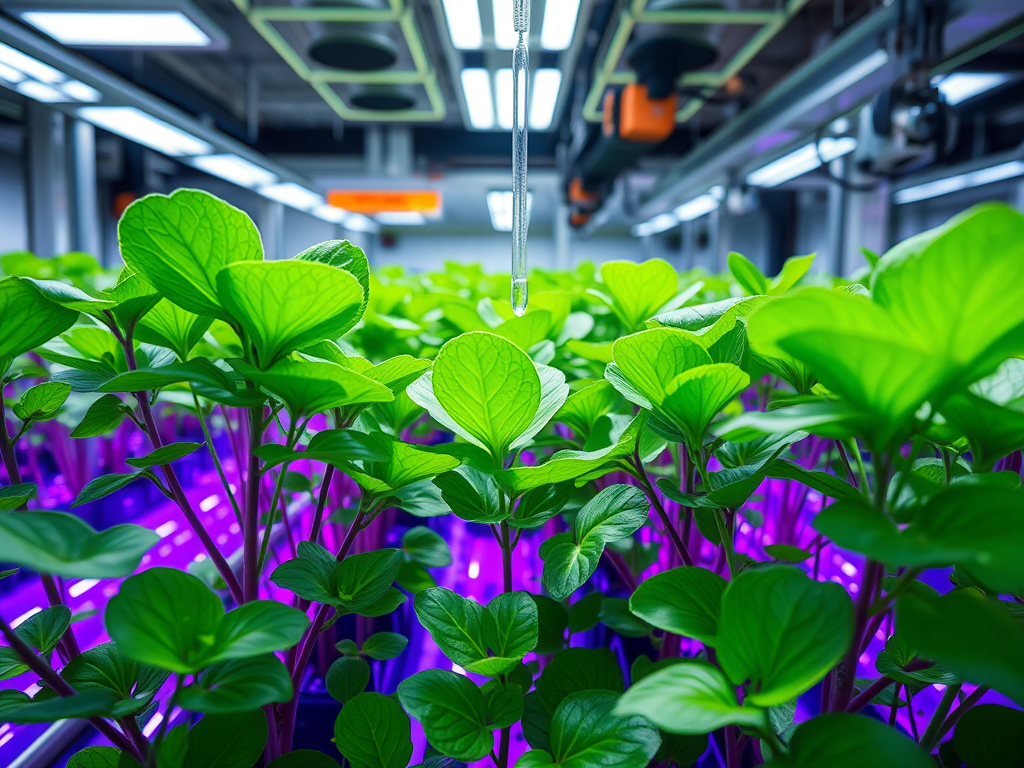
3. Indoor Vertical Farming
Controlled environments maintain ideal lighting, humidity, CO₂, and nutrient delivery. This yields predictable, repeatable biomass with high protein expression rates.
4. Harvest, Extraction & Purification
Biomass is mechanically harvested, macerated, and passed through clarification, filtration, and chromatography workflows—yielding high-purity proteins suitable for R&D, GMP, or industrial applications.
5. Validation Pipeline
Analytical tests (SDS-PAGE, HPLC, mass spec), bioactivity assays, and functional validation verify performance. Scaling moves from bench prototype to pilot, and eventually to commercial volumes.
Breakthroughs in Expression
T7 RNA Polymerase for mRNA Production
On May 15, 2024, Tiamat announced a key milestone: successful expression of T7 polymerase in N. benthamiana—the foundational enzyme in in vitro transcription (IVT) systems for mRNA vaccines.
This opens doors to:
- Plant-derived mRNA enzyme kits
- Lower-cost reagents for vaccine development
- Sustainability improvements and pandemic preparedness
hFGF2 Yields & Industrial Relevance
Tiamat also reported expressing human FGF2 (Fibroblast Growth Factor 2) at over 20 mg/kg plant biomass, critical for regenerative medicine and cell culture optimization.
Human Prolactin with BIOMILQ
In partnership with BIOMILQ (a breast-milk biotech startup based in Research Triangle Park), Tiamat produced human prolactin, validating that plant-made versions match efficacy of mammalian-sourced ones but at 1/10th the cost.
Strategic Partnerships & Ecosystem
Quantoom Biosciences
In May 2024, Tiamat entered a strategic partnership with Quantoom (Belgium’s Univercells group) to develop and supply plant-derived enzymes to their Ntensify™ & Ncapsulate™ mRNA production platforms. This collaboration amplifies work across:
- mRNA vaccine manufacturing
- Enzyme sourcing for scale
- Integration into GMP workflows
BIOMILQ Collaboration
The BIOMILQ alliance underscores Tiamat’s credibility in the food-tech space, focusing on:
- Animal-free biomolecule production for cell cultured proteins
- Cost reductions critical to scaling alternative proteins and infant nutrition
Applications & Impact
1. Cellular Agriculture & Cultivated Meat
Growth factors make up over 90 % of cell culture media cost. Tiamat-produced cytokines (e.g. FGF, EGF, prolactin) can reduce media costs dramatically—accelerating commercial scaling of cultivated meat, seafood, dairy, and cellular milk alternatives.
2. Regenerative Medicine & Cell Therapy
Growth factors are essential in tissue engineering. Affordable FGF2 (like Tiamat’s) and other hormones can drastically lower costs for cell therapies, organoids, and regenerative scaffolds.
3. mRNA Vaccines & Enzymes
Plant-made T7 polymerase and other transcription factors are foundational to low-cost mRNA vaccine manufacturing—a high-impact platform during pandemics and for future decentralized production.
4. Research Reagents & Industrial Enzymes
Affordable, animal-free growth factors broaden access to biolab reagents and enzyme kits, and could extend into industrial enzyme markets (e.g., for food, biofuels, bioremediation).
Technical and Commercial Challenges
- Regulatory Acceptance
Plant-based biologics are novel; demonstrating consistency, purity, safety, and equivalence will require stringent regulatory studies—especially for human health use. - Scale and Supply Chain
Pilots must expand to commercial vertical farms. This requires capex, skilled ops staff, and supply chain synchronization (vector prep, plant cycles, downstream capacity). - Market Competition
Established alternatives (E. coli, CHO cells) dominate. Tiamat’s price/performance must convincingly beat incumbent systems. - Funding Lifecycle
Pre-revenue platforms risk capital scarcity—unless early commercial contracts or licensing deals materialize.
Future Possibilities & Roadmap
Scaling Enzyme Services
As Quantoom’s enzyme supply chain matures, Tiamat could evolve into a global provider of plant-exclusive IVT kits—possibly entering diagnostics and decentralized vaccine production sectors.
Expansion into More Therapeutic Proteins
Beyond basic growth factors, next-generation pipelines could include:
- Monoclonal antibodies
- Hormones like insulin, hGH
- Complex enzymes for industrial biotech
Decentralized Vertical Farms
Imagine regional modular vertical farms—capable of producing biologics locally to meet epidemic outbreaks, reduce logistics, and champion biosecurity.
Regulatory Trailblazing
Building safety datasets for equivalence, allergen absence, and product consistency will pave regulatory frameworks for future plant-made biologics.
Open Platform Licensing Models
Tiamat could license its plant bioreactor system to academic labs, small biotech’s, or agricultural partners—creating a distributed innovation ecosystem.
Why Tiamat Matters
Tiamat Sciences brings a confluence of innovation: sustainability, biotech, and affordability. By leveraging plants, they cut carbon emissions, lower costs, and reduce dependency on animal systems. They address multiple grand challenges:
- Affordable food-tech and protein
- Enabling next-gen biomanufacturing for vaccines and therapeutics
- Decentralizing health and food production
Even if successful commercial scale-up remains to be achieved, Tiamat’s work sends ripples across biotech—showing a credible pathway toward farm-to-flask protein production.
Tiamat Sciences is not just another biotech start-up—they’re reshaping how proteins are made. Their breakthroughs (T7 polymerase, hFGF2, prolactin) and partnerships (Quantoom, BIOMILQ) test the limits of plant molecular farming. As they validated at scale and navigate regulation, they might usher in:
- Sustainable, low-cost biologics
- Decentralized health infrastructure
- Clean protein accessibility
- Ecosystems for plant-based bioreagent production
The journey is still ongoing—but Tiamat has planted the seed.
🧾 Sources & Further Reading
- Quantoom & Tiamat partnership for mRNA enzyme supply (May 27 2024) Quantoom Biosciences+3Quantoom Biosciences+3iGrow News+3PR Newswire
- T7 polymerase breakthrough in plants (May 15 2024)
- PitchBook overview on funding and structure PitchBook
- Seed-extension funding: $2M round in March 2023 Startup Weekly+1PitchBook+1
- BIOMILQ-collaboration for plant-derived prolactin: cost and efficacy PR Newswire+3Startup Weekly+3NCBiotech+3
- Cell-based food production report on growth factors BioSpace+2NCBiotech+2
 Tech and Tofu
Leave a comment