1. Introduction: Why We Should Care
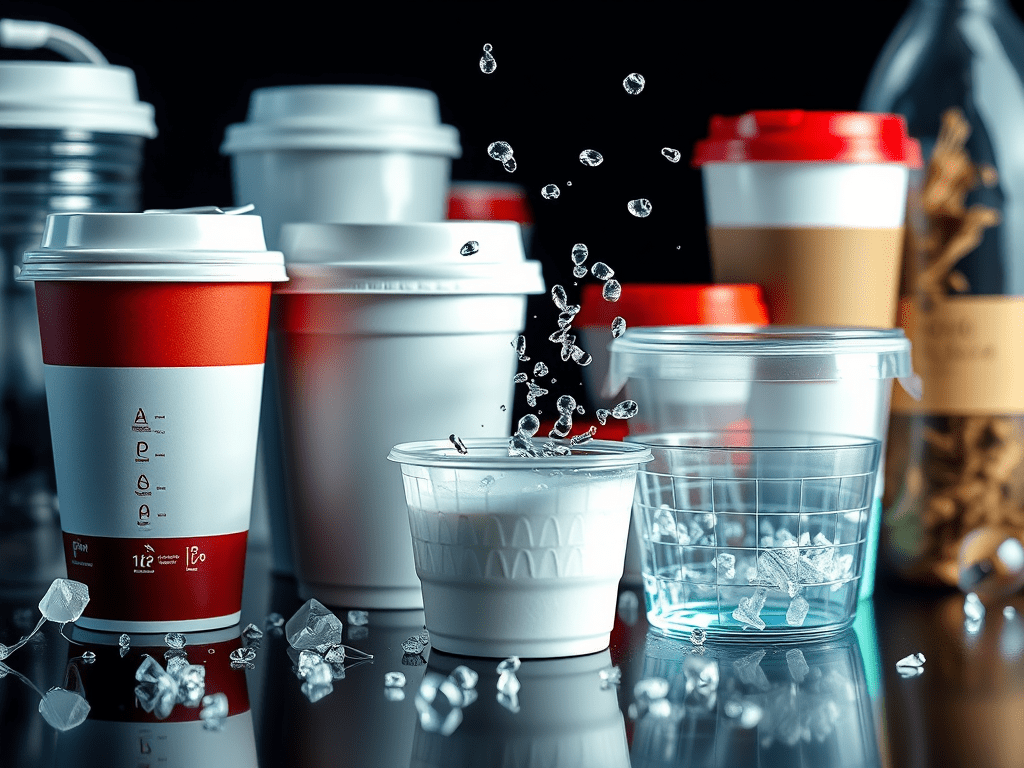
Every time you grab a coffee in a disposable cup or store leftovers in a plastic container, tiny particles are sloughing off—particles known as microplastics. These aren’t just pollutants; they may be direct threats to your health. A review of 103 studies found that everyday actions—opening plastic drink bottles or using plastic-lined coffee cups—shed microplastics into food and drinks (sciencealert.com).
2. Scientific Findings on Microplastic Release
2.1 Disposable Single-Use Cups
A 2023 study by Chen et al. examined 90 batches of commercial disposable cups—including PE-coated paper cups, polypropylene (PP) cups, and polystyrene (PS) cups. They tested how many microplastic (MP) particles leached into water at 95 °C over 20 minutes. The results were alarming:
- PE‑coated paper cups: 675–5,984 particles per liter
- PP cups: 781–4,951 particles per liter
- PS cups: 838–5,215 particles per liter
There was no significant difference between types; heat was the main trigger (pubmed.ncbi.nlm.nih.gov).
Another study by Akbulut et al. (2024) looked at single-use cups across plastics: PP, PS, PE-coated paper, EPS. With water at 4 °C, 50 °C, and 80 °C, over time (0–20 minutes), microplastics ranged from 126 particles/L to 1,420 particles/L. The highest release was from PP cups at 50 °C for 20 minutes; lowest was PE‑coated paper at 4 °C for 0 minutes. Notably, pre-washing the cups reduced microplastic release by 52–65%. Researchers estimated annual exposure via disposable beverage cups to be between 18,720 and 73,840 microplastic particles (pmc.ncbi.nlm.nih.gov).
2.2 Nano plastics from Coffee Cups Liner
The National Institute of Standards and Technology (NIST) reported that single-use hot beverage (coffee) cups, typically lined with low-density polyethylene (LDPE), release trillions of nanoparticles per liter when exposed to hot water (nist.gov).
2.3 Broader Evidence Across Packaging
A comprehensive review found that nearly 96% of tested food packaging released detachable microplastics under normal usage (pirg.org). That means the issue isn’t limited to cups—it’s rampant across packaging types.
3. Health and Environmental Concerns
Microplastics aren’t inert, and scientists are beginning to map their effects more clearly:
- Human exposure: Research has shown microplastics in human blood, lungs, liver, placenta, and even the brain. Once inside the body, these particles can accumulate and cross biological barriers.
- Health risks: Microplastics are linked to inflammation, oxidative stress, hormone disruption, and the transportation of toxic chemicals (e.g., BPA, phthalates). Chronic exposure may raise risks for cardiovascular disease, immune dysfunction, and certain cancers (health.com, nypost.com).
- Chemical hitchhikers: Plastics can absorb and carry persistent organic pollutants (POPs), heavy metals, and endocrine-disrupting chemicals, making the ingested particles more harmful than their size suggests.
- Environmental impact: Even “eco-friendly” paper cups are not safe. They are often lined with plastic films, which break down and leach toxins. One study observed that paper cups negatively affected freshwater organisms like midge larvae, impairing their development (wired.com).
- Brewing with plastic equipment: Coffee makers, plastic filter cups, and single-serve pod machines expose hot water to heated plastic surfaces for several minutes. This interaction increases leaching of microplastics and chemicals like BPA into the drink. Repeated use and wear can worsen the release. Experts recommend opting for stainless steel or glass coffee makers, ceramic pour-over cones, or French presses with metal filters to avoid adding another hidden source of plastic to your daily cup.
The bottom line: microplastics don’t just vanish—they accumulate in bodies and ecosystems. The more we rely on plastic in daily rituals like coffee drinking, the higher the risks.
4. Safer Alternatives: Practical, Resourceful Swaps
Let’s shift to solutions. Experts and consumers alike recommend ditching plastic in favour of these alternatives:
4.1 Glass
- Tempered glass containers are non-toxic, heat-resistant, and reusable. They don’t leach microplastics or retain odour (e.g., Pyrex sets) (greenhive.io, foodandwine.com, eatingwell.com).
- Heat-resistant glass jars (e.g., mason jars) are perfect for pantry storage or leftovers (southernliving.com, sfgate.com).
4.2 Stainless Steel
- Stainless containers are durable, non-reactive, and safe—just avoid microwaving them (greenhive.io, health.com).
4.3 Ceramic
- Lead-free ceramic dishes store food safely and resist scratches or chemical leaching (greenhive.io, foodandwine.com).
4.4 Silicone
- Silicone bags and molds (e.g., Stasher) are reusable, heat- and food-safe; good for storage (southernliving.com, greenhive.io).
4.5 Beeswax or Vegan Wraps
- Made of cotton infused with beeswax (and oils), these wraps are reusable and compostable once worn out (greenhive.io, en.wikipedia.org).
4.6 Tiffin Carriers & Cotton Bags
- Tiffin carriers (usually stainless/aluminium) with multiple tiers offer plastic-free transport (greenhive.io).
- Cotton bags, ideally organic, work for storage too (greenhive.io).
4.7 Innovative Biodegradable Packaging
- Bagasse and bamboo take-out ware (like BPE’s “Gracz” cups and plates) are fully biodegradable and non-toxic (en.wikipedia.org).
- Edible packaging: Innovative edible cups made of Kodo millet, guar gum, hibiscus are biodegradable or consumable (en.wikipedia.org).
5. Everyday Tips to Reduce Exposure—Beyond Containers
Experts offer these lifestyle recommendations:
- Avoid plastic entirely in food prep—from utensils to storage. Glass, wood, metal, ceramic are safer (health.com).
- Don’t heat food in plastic; microwaving increases particle release (nypost.com).
- Skip plastic cutting boards and old non-stick pans—they shed microplastics and often contain PFAS (health.com).
- Wash disposable cups before use to potentially reduce microplastic release by 50–60% (pmc.ncbi.nlm.nih.gov).
- Use refill shops, store in bulk, and bring your own reusable containers to minimize packaging exposure (sfgate.com, southernliving.com).
6. Summary Table
| Concern | Details |
| Microplastic Release | Disposable cups release 126–6,000+ particles/L; NIST confirms trillions of nanoparticles in hot coffee cups. |
| Health Risks | Linked to organ infiltration, chronic disease, inflammation, endocrine disruption. |
| Common Packaging | 96% of tested packaging sheds microplastics under normal conditions. |
| Alternatives | Glass, stainless steel, ceramic, silicone, beeswax wraps, tiffin, biodegradable & edible packaging. |
| Practical Tips | Avoid plastic heating/storing; wash new cups; use refill & zero-waste options; choose non-plastic prep tools. |
7. Final Thoughts
Microplastic exposure from food containers—especially hot drinks in disposable cups—is an insidious but tangible source of contamination. Scientific studies make it clear: even minimal everyday use results in measurable particle ingestion. While the full long-term health consequences are still under investigation, there’s enough evidence to warrant making smart swaps.
Switching to glass or stainless-steel containers, using beeswax wraps over plastic wrap, opting for biodegradable or compostable materials when disposables are needed—these changes are simple, effective, and within reach. They not only protect your health—they reduce waste and environmental damage too.
8. Resources & Links
Key Studies & Reviews
- Chen et al. (2023) on microplastic release from disposable cups (pubmed.ncbi.nlm.nih.gov)
- Akbulut et al. (2024) study of exposure times & cups, plus washing effects (pmc.ncbi.nlm.nih.gov)
- NIST findings: nanoparticles from beverage cup liners (nist.gov)
- Review: 96% packaging releases microplastics under normal conditions (pirg.org)
- Broader contamination studies (103 studies review) (sciencealert.com)
- Microplastics in bottled water & containers (en.wikipedia.org)
Alternative Materials
- Glass, ceramic, stainless steel benefits (greenhive.io, foodandwine.com, eatingwell.com, southernliving.com, sfgate.com)
- Silicone bags and wraps (southernliving.com, greenhive.io)
- Beeswax wraps (Wikipedia) (en.wikipedia.org)
- Biodegradable bagasse tableware (“Gracz”) (en.wikipedia.org)
- Edible packaging (Kodo millet cups) (en.wikipedia.org)
Expert Advice
- Tips from Health.com on avoiding microplastic exposure (health.com)
- Broader home swaps (glass, reducing plastic) from SFGate (sfgate.com)
- Environmental concerns of paper cups from Wired (wired.com)
 Tech and Tofu
Leave a comment