Introduction
As global populations grow, and urbanization accelerates, traditional farming methods face significant challenges in feeding the world’s people. Vertical farming and urban agriculture have emerged as innovative solutions to address these issues. By rethinking how and where food is grown, these practices promise to make agriculture more sustainable, efficient, and accessible.
This article explores the concept of vertical farming and urban agriculture, delving into the processes involved, the benefits they offer, and the exciting possibilities they hold for the future of food production.
The Idea Behind Vertical Farming and Urban Agriculture
What Is Vertical Farming?
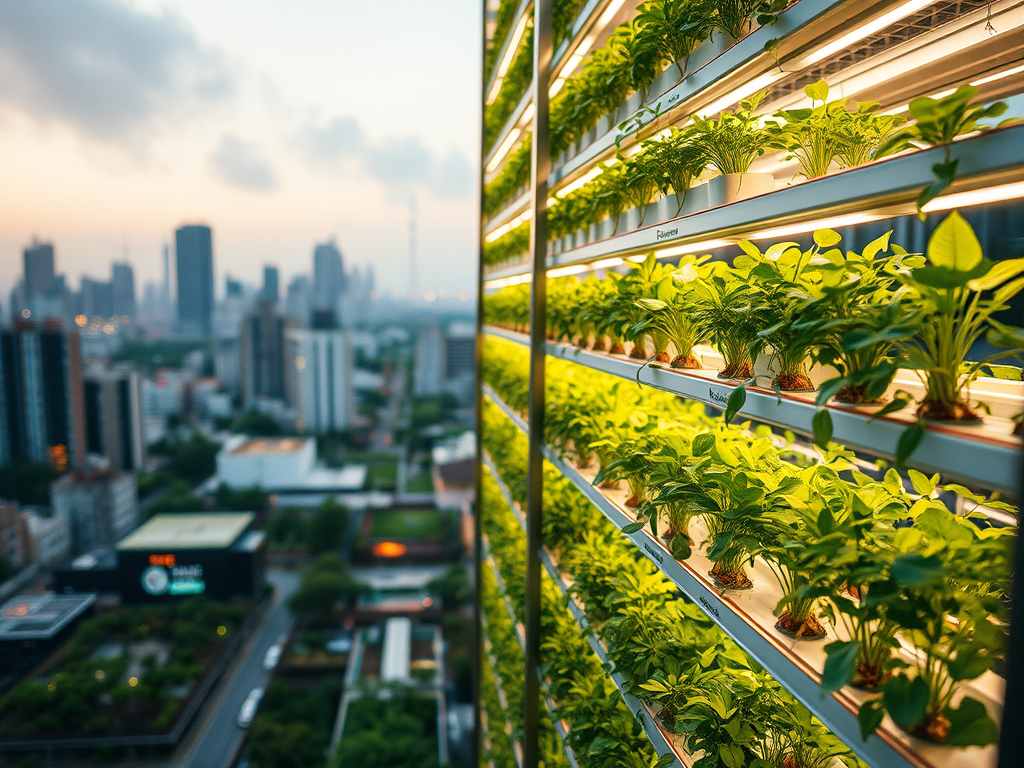
Vertical farming is the practice of growing crops in stacked layers, often within controlled environments such as skyscrapers, warehouses, or shipping containers. Unlike traditional farming, which relies on expansive tracts of land, vertical farming utilizes vertical space to maximize production in smaller areas. Key components include:
- Hydroponics: Growing plants in nutrient-rich water without soil.
- Aeroponics: Suspending plant roots in the air and misting them with nutrients.
- Aquaponics: Combining fish farming with hydroponics in a symbiotic system.
What Is Urban Agriculture?
Urban agriculture refers to the cultivation, processing, and distribution of food within urban areas. This can include rooftop gardens, community plots, and indoor farms. It aims to bring food production closer to consumers, reduce transportation costs, and promote local food systems.
How Vertical Farming Works
Controlled Environment Agriculture (CEA)
Vertical farming operates within a controlled environment to ensure optimal growing conditions. Factors such as light, temperature, humidity, and nutrient levels are precisely managed using technology. Here’s a closer look at the components:
- Lighting:
- LED lights simulate sunlight and provide the necessary spectrum for photosynthesis. Unlike natural sunlight, LEDs can be tailored to specific crop needs and operate 24/7.
- Water Systems:
- Water use in vertical farming is highly efficient. Hydroponic and aeroponic systems recycle water, using up to 95% less than traditional farming.
- Nutrient Delivery:
- Nutrients are delivered directly to plants, either via water in hydroponics or mist in aeroponics, ensuring no wastage.
- Automation:
- Robots and AI monitor plant growth, harvest crops, and manage environmental factors, reducing human labor and errors.
Types of Crops Grown
Vertical farming is well-suited for growing leafy greens, herbs, microgreens, strawberries, and tomatoes. While staple crops like wheat or corn are less common due to space and resource requirements, advancements may make this feasible in the future.
How Urban Agriculture Works
Urban agriculture takes various forms depending on available space and community needs. Common methods include:
- Rooftop Gardens:
- Flat roofs are converted into green spaces where vegetables and fruits can grow. These gardens also provide insulation and reduce urban heat.
- Community Gardens:
- Vacant lots or shared spaces are divided into plots where local residents can grow their own food.
- Indoor Farming:
- Similar to vertical farming, indoor farms within urban areas utilize advanced technology to grow food year-round.
- Aquaponics and Hydroponics:
- Compact systems are often used in urban homes and schools to grow food and educate communities about sustainable practices.
Benefits of Vertical Farming and Urban Agriculture
Environmental Benefits
- Land Conservation:
- Vertical farming requires less land, reducing the need to clear forests or disrupt ecosystems.
- Water Efficiency:
- Recycling water systems drastically reduce water consumption.
- Reduced Carbon Footprint:
- Locally grown food eliminates the need for long transportation routes, cutting greenhouse gas emissions.
- No Pesticides:
- Controlled environments minimize pests, reducing or eliminating the need for chemical pesticides.
Economic and Social Benefits
- Year-Round Production:
- Controlled environments allow for consistent food supply, regardless of weather or seasons.
- Job Creation:
- Vertical farms and urban agriculture initiatives create jobs in technology, maintenance, and food production.
- Food Security:
- Growing food locally reduces dependence on global supply chains, improving resilience against disruptions.
- Community Building:
- Urban agriculture projects often foster stronger communities by encouraging collaboration and shared goals.
Challenges Facing Vertical Farming and Urban Agriculture
Despite their potential, vertical farming and urban agriculture face several challenges:
- High Initial Costs:
- Building and maintaining vertical farms require significant investment in technology, infrastructure, and energy.
- Energy Consumption:
- LED lighting and climate control systems consume electricity, which can offset environmental benefits unless renewable energy sources are used.
- Crop Limitations:
- Not all crops are suitable for vertical farming. Staples like rice and wheat remain difficult to grow in these systems.
- Scalability:
- Scaling up urban agriculture projects to meet global food demands requires coordinated planning, policy support, and public-private partnerships.
Future Possibilities
Integration with Smart Cities
As cities become more connected and data-driven, vertical farming and urban agriculture can integrate into smart city frameworks. IoT devices and AI can optimize resource use, predict crop yields, and monitor food quality in real-time.
Diversification of Crops
Research into genetically modified crops and innovative farming techniques may enable the cultivation of staple grains and protein-rich plants in vertical systems, broadening the scope of urban agriculture.
Renewable Energy Integration
To address energy concerns, future farms can incorporate solar panels, wind turbines, and waste-to-energy systems, reducing reliance on nonrenewable sources.
Space Exploration
NASA and other space agencies are exploring vertical farming as a potential food source for long-term space missions. These systems could sustain astronauts on Mars or other planets, showcasing the adaptability of the technology.
Increased Community Participation
Advances in DIY farming kits and urban gardening tools may empower individuals and communities to grow their own food, promoting self-sufficiency and reducing food deserts in underserved areas.
Conclusion
Vertical farming and urban agriculture represent a paradigm shift in how food is produced, distributed, and consumed. By leveraging technology and reimagining the role of agriculture in urban spaces, these practices offer promising solutions to some of the world’s most pressing challenges: food security, climate change, and urbanization.
While challenges remain, the ongoing development of innovative farming techniques, integration with renewable energy, and community-driven initiatives are paving the way for a more sustainable and resilient food system. As these ideas continue to grow and evolve, the future of agriculture may very well be vertical and urban.
Related Links
 Tech and Tofu
Leave a comment