Precision fermentation is quietly reshaping how we think about food, medicine, materials, and sustainability. It’s not science fiction. It’s happening now—inside bioreactors instead of farms, using microbes instead of livestock. The idea is simple but powerful: program microorganisms to produce specific molecules. The impact? Game-changing.
This article breaks down what precision fermentation is, how it works, its potential future applications, and how AI is making it smarter, faster, and more scalable.
What Is Precision Fermentation?
Precision fermentation is a biotechnological process where genetically engineered microorganisms—like yeast, bacteria, or fungi—are used to produce specific ingredients. It’s called “precision” because it doesn’t rely on traditional fermentation (like brewing beer or yogurt), which produces a mix of products. Instead, it precisely engineers microbes to make one or a few targeted compounds.
Examples of What It Produces:
- Proteins: Casein and whey (for dairy alternatives), collagen, egg whites, enzymes
- Fats: Omega-3 fatty acids, structured lipids
- Vitamins: B12, A, D
- Pharmaceuticals: Insulin, growth hormones, antibodies
- Materials: Spider silk proteins, biodegradable plastics
The result is a clean, scalable, animal-free production method. It’s faster than farming, uses less land and water, and emits fewer greenhouse gases.
How the Process Works
1. Gene Selection and Insertion
Scientists begin by identifying the DNA sequence responsible for producing the target compound. For example, to make whey protein, they isolate the gene that allows cows to produce β-lactoglobulin.
This gene is then inserted into a microbial host, such as yeast or fungi, using tools like CRISPR or plasmids. This turns the microbe into a mini-factory.
2. Fermentation
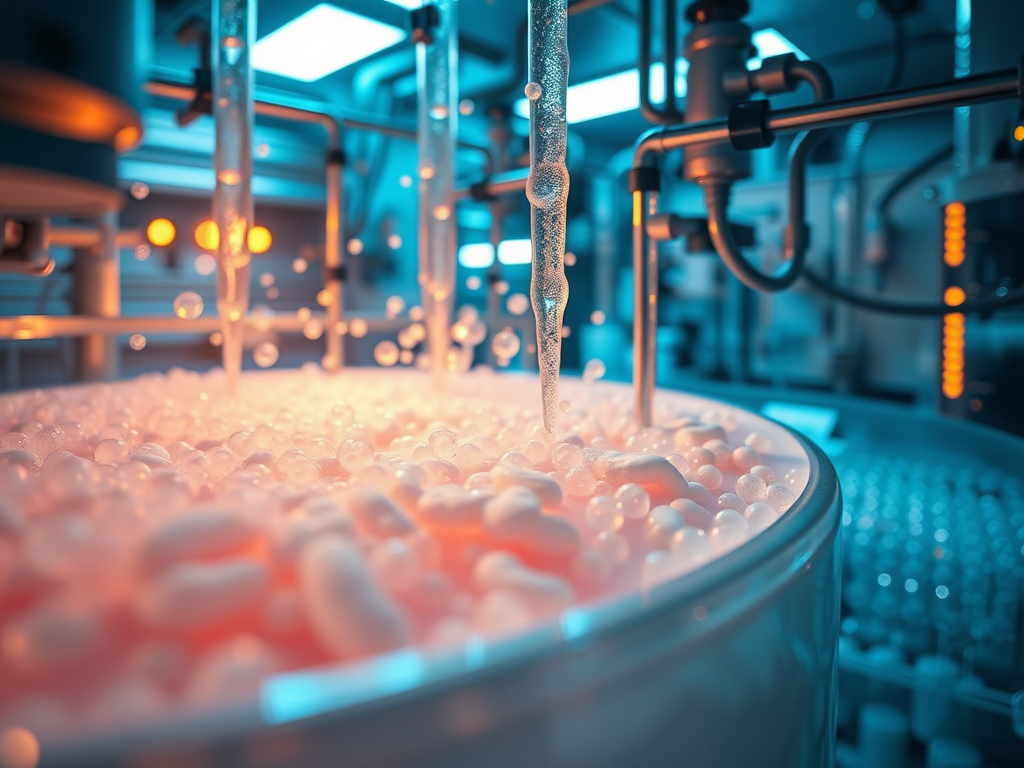
The engineered microbe is placed into a bioreactor—a controlled vessel similar to those used in brewing beer. It’s fed sugars and nutrients to help it grow and produce the target molecule. Temperature, pH, oxygen, and pressure are tightly regulated.
Unlike traditional fermentation, the product isn’t a byproduct—it’s the main goal.
3. Separation and Purification
Once fermentation is complete, the target compound is extracted and purified. Depending on the molecule, this can involve centrifugation, filtration, chromatography, or crystallization.
4. Formulation
The purified ingredient is then blended or formulated into final consumer products—like dairy-free cheese, bio-based fabrics, or therapeutic drugs.
Why It Matters
Precision fermentation isn’t just cool science—it addresses some of the most pressing global challenges:
- Climate change: Animal agriculture accounts for 14.5% of global greenhouse gas emissions. Producing meat and dairy through microbes can slash emissions dramatically.
- Resource use: Traditional farming uses enormous amounts of land, water, and feed. Fermentation uses a fraction of those resources.
- Food security: Microbial production is immune to drought, disease, and supply chain disruptions. It’s location-flexible and scalable.
- Animal welfare: No animals are needed, reducing ethical concerns and zoonotic disease risks.
Current Applications and Companies Using Precision Fermentation
Precision fermentation is no longer experimental—it’s being used commercially in food, pharmaceuticals, and materials. Here’s a detailed look at leading precision fermentation companies and how they’re applying the technology to real-world products.
Food Industry: Animal-Free Dairy, Eggs, and Meat
Precision fermentation is redefining alternative proteins by producing animal-identical compounds without animals. This means better taste, texture, and nutrition—without the environmental cost.
Perfect Day (USA)
Perfect Day uses fungi to produce β-lactoglobulin, the primary whey protein found in cow’s milk. The company supplies animal-free dairy ingredients for products like milk, ice cream, and cream cheese. Their ingredients are used by brands like Brave Robot and are supported by partnerships with Nestlé and Mars.
Formo (Germany)
Formo is focused on making real cheese without animals. It uses precision fermentation to produce casein proteins, enabling the creation of authentic mozzarella, cream cheese, and aged cheeses. As Europe’s first precision fermentation dairy startup, Formo is at the forefront of regulatory and consumer adoption in the region.
The EVERY Company (USA)
The EVERY Company uses precision fermentation to create animal-identical egg proteins. Its products include EVERY EggWhite™, EVERY Egg™, and EVERY Pepsin, used in baking, beverages, and supplements. The company has formed partnerships with brands like Pressed Juicery and luxury food companies to bring these proteins to market.
Remilk (Israel)
Remilk engineers microbes to produce dairy proteins identical to those in cow’s milk. Their products are cholesterol-free, lactose-free, and hormone-free, offering a scalable alternative to traditional dairy. The company is rapidly expanding, with a large-scale production facility opened in Denmark.
Imagindairy (Israel)
Imagindairy also focuses on dairy proteins through precision fermentation but emphasizes AI-assisted strain optimization to increase efficiency. Their approach aims to make animal-free dairy affordable and widely available.
Pharmaceuticals: Biologics, Enzymes, and Therapeutics
The pharmaceutical sector was the first to adopt precision fermentation at scale—and it continues to lead in biotech innovation.
Genentech / Eli Lilly
In 1982, Eli Lilly released the world’s first synthetic human insulin, produced using precision fermentation. This milestone replaced animal-sourced insulin and transformed diabetes care.
Zymergen and Ginkgo Bioworks (USA)
These companies operate as biofoundries, providing platforms to design and produce biological molecules at scale. They use AI and automation to develop enzymes, therapeutics, and custom molecules for pharma clients.
Octarine Bio (Denmark)
Octarine Bio engineers yeast to produce high-value molecules like cannabinoids and psychedelic alkaloids for therapeutic use. Their precision fermentation platform enables scalable and consistent production of compounds otherwise difficult or expensive to extract from plants.
Materials: Sustainable Textiles and Biopolymers
Precision fermentation is pushing the frontier of sustainable materials. By mimicking nature’s proteins, companies are designing biodegradable and high-performance alternatives to synthetic or animal-derived materials.
Bolt Threads (USA)
Bolt Threads produces Mylo™, a leather-like material made from mycelium (mushroom roots), and Microsilk™, a spider silk protein made using precision fermentation. These materials are used by Adidas, Stella McCartney, and other brands focused on sustainable fashion.
Spiber (Japan)
Spiber makes Brewed Protein™, a family of bio-based fibers created through microbial fermentation. These proteins are designed for clothing, packaging, and industrial applications. The company is scaling its production facility in Thailand to meet growing demand.
Modern Meadow (USA)
Modern Meadow uses precision fermentation to produce Bio-Alloy™, a material based on fermented collagen. It offers a sustainable leather alternative that can be used in fashion, interiors, and accessories. Modern Meadow is working with industrial partners to scale manufacturing.
Startups to Watch in Precision Fermentation
A wave of new startups is expanding the potential applications of precision fermentation, targeting everything from infant nutrition to lab-grown meat scaffolding and bioplastics.
- Tiamat Sciences – Developing plant-based scaffolds for cultured meat
- Change Foods – Focusing on animal-free cheese production
- Helaina – Creating breast milk proteins through precision fermentation
- New Culture – Making mozzarella with fermented casein
- Planetary – Offering biomanufacturing infrastructure as a service
- Clara Foods – Producing functional ingredients like pepsin and albumin without animals
These companies represent a growing ecosystem poised to revolutionize food, health, and materials using biology instead of brute force.
The Role of AI in Precision Fermentation
Precision fermentation is powerful, but it’s also complex. Designing a microbe that consistently produces high yields of a specific compound takes time and trial. This is where AI and machine learning are stepping in and transforming the field.
1. Protein Design and Engineering
AI models like AlphaFold have revolutionized protein structure prediction. Understanding how proteins fold helps in designing more stable, soluble, and functional molecules. Tools like Rosetta, ESMFold, and ProGen go further, helping scientists create entirely new proteins or optimize existing ones for performance.
2. Strain Optimization
Machine learning models help predict how genetic modifications will affect microbial metabolism. This allows for smarter design of microbial strains that can produce higher yields with less trial and error. AI can simulate thousands of genetic permutations and highlight the most promising ones.
3. Fermentation Optimization
Sensors in bioreactors collect real-time data on temperature, pH, oxygen levels, biomass, and metabolite concentrations. AI algorithms analyze this data to adjust conditions dynamically, improving productivity. Companies are also building digital twins of bioreactors—virtual models that learn and adapt from every run.
4. Automated Screening
High-throughput screening of microbial strains is a bottleneck. AI-powered imaging and analysis tools can automatically classify and select top-performing strains from thousands of samples, drastically speeding up R&D.
5. Supply Chain and Scaling
AI helps predict ingredient needs, optimize production runs, and reduce energy or resource waste. This makes scale-up smoother and more efficient, especially for global distribution and logistics planning.
Future Possibilities
1. Decentralized Food Production
With containerized fermentation units, food production could be localized—urban microbreweries for milk or meat, custom nutrients on-demand. This could revolutionize food access in remote or disaster-struck regions.
2. Personalized Nutrition
Imagine precision fermentation tailored to your DNA or microbiome—custom blends of vitamins, proteins, and prebiotics, produced locally or even at home.
3. New Materials
Beyond silk and leather, microbes could produce advanced materials: carbon-negative plastics, biodegradable foams, conductive fibers for electronics, or even building materials.
4. Synthetic Ecosystems
Multiple strains could be engineered to work together—like a microbial assembly line. One microbe produces a precursor, another modifies it, and a third packages the final product. AI could orchestrate this complex choreography.
5. Closed-loop Biomanufacturing
Precision fermentation can also help recycle waste. Microbes could turn agricultural byproducts, CO₂, or even plastic into useful compounds—closing the loop in industrial ecosystems.
Challenges Ahead
While promising, the field faces real obstacles.
- Cost: Precision fermentation is still more expensive than traditional methods, especially at scale.
- Regulation: Novel proteins require rigorous testing and approval.
- Consumer perception: Some people remain wary of genetically engineered or lab-grown products.
- Infrastructure: Scaling fermentation requires bioreactors, purification systems, and trained personnel—an entire industry needs to grow alongside the tech.
- Supply chain: Feedstocks like sugar and energy still matter. Fully green fermentation needs sustainable inputs too.
But these are not dealbreakers. They’re challenges to solve—and AI is already helping with many of them.
The Bottom Line
Precision fermentation is more than a food trend. It’s a platform technology with the potential to transform how we produce not just food, but drugs, fabrics, fuels, and more. It takes us beyond the limitations of agriculture and into a future where biology meets engineering, and intelligence—both artificial and natural—powers production.
As AI and automation supercharge discovery and scale-up, the pace of innovation will only accelerate. What took decades (like synthetic insulin) may now take months. What once needed animals and acres may soon need only code and microbes.
We’re not just brewing beer anymore. We’re brewing the future.
 Tech and Tofu
Leave a comment